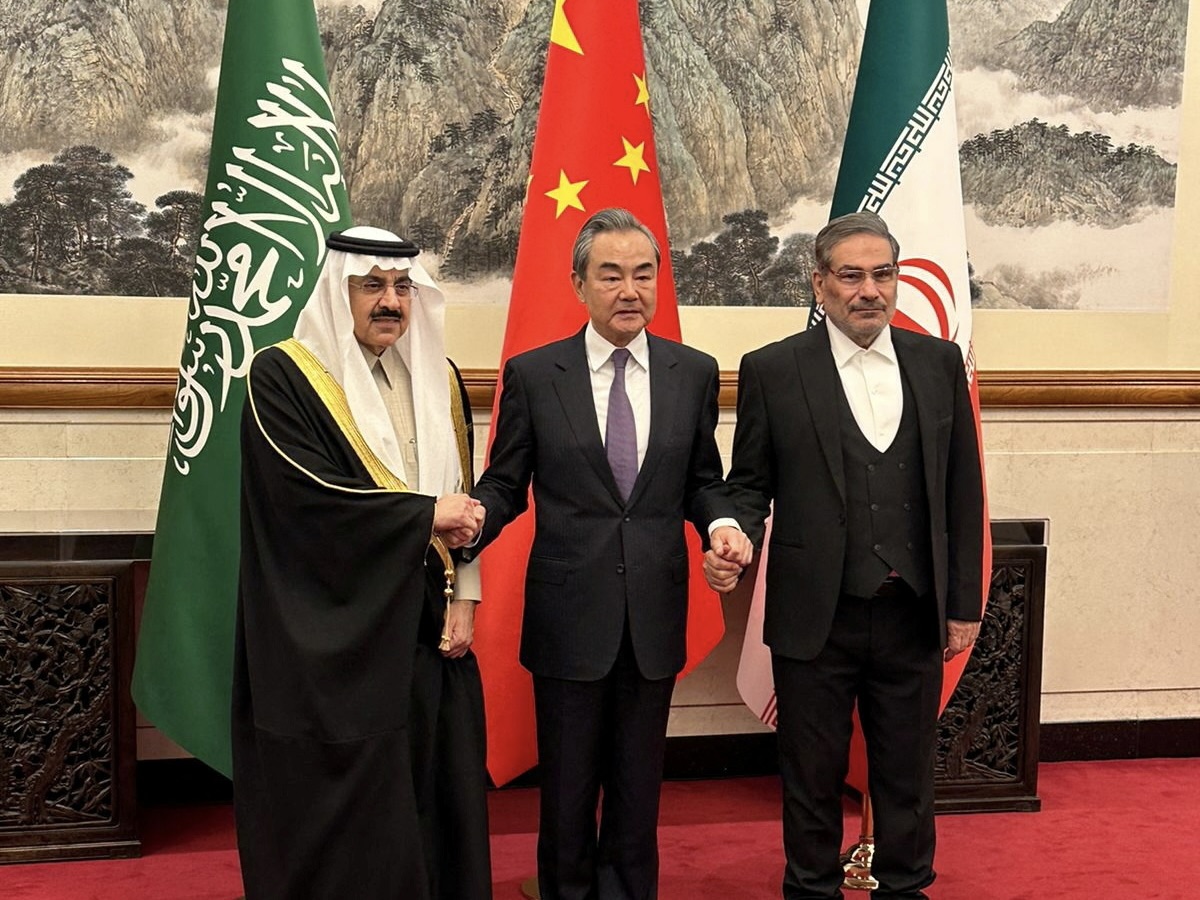
The standard headline reads: "Leaders call for dialogue; peace deal imminent." It's a clean, reassuring narrative, suggesting that after enough talk, the messy business of conflict just evaporates. But if you look closer, the language of high-stakes diplomacy rarely means simple consensus; often, it's just the sound of immense structural resistance.
The Theater of Dialogue vs. The Chemistry of Conflict
Turns out, when major powers like the U.S., Iran, and regional mediators sit down to review a 14-point proposal, the actual process isn't a polite handshake followed by a signed treaty. It's far more complicated—less like signing a document and more like trying to balance a highly reactive chemical mixture.
The official narrative focuses on the call for dialogue. We're told that Foreign Ministers like Abbas Araghchi are championing diplomatic channels, using the language of peace. But the language itself is the critical part here. When they talk about 'dialogue,' they're not describing a casual chat over coffee; they're describing a highly constrained process where every sentence is measured for its geopolitical payload.

This is where the academic perspective must take over. A headline simplifies geopolitical reality into a single, actionable verb, usually "talk." But the mechanics of this situation—the deeply ingrained red lines, the asymmetrical power dynamics, the historical grievances—they don't evaporate just because a proposal is drafted. They cling like mineral deposits to a fault line.
Why "Talking" Isn't Enough
What gets lost in all this press coverage is the structural inertia. Conflict, when it reaches a certain level of violence or strategic commitment, is less about ideology and more about deeply held national security parameters.
The U.S. making "very good talks" with Iran, as reported, sounds like a major breakthrough, doesn't it? But the issue isn't whether they can agree; it's about whose foundational premise—who gets to define the baseline—is accepted. For example, a proposal might mandate de-escalation, but if that proposal fails to address the Iranian core belief in its right to regional autonomy (or the U.S. belief in unfettered freedom of navigation), the whole thing fails instantly.
Diplomacy, in this high-stakes context, is like observing a geological fault line. You can make beautiful diagrams and agree on where the plates should meet, but the stress build-up—the massive, unstated forces—they're still there. They're going to release energy regardless of how pleasant the preceding conversation was.
Nobody's saying it, but the most critical points aren't usually the points that are explicitly debated; they're the ones that are subtly ignored in the pursuit of the visible agreement.
The Unstated Variables
Here's what's strange: the proposal itself, the 14 points, likely covers the surface irritants—the ceasefire, the immediate withdrawal of forces, etc. But the underlying architecture of the conflict is determined by things like energy transit rights, regional military alliances (the Iranian proxies being a key example), and who controls the narrative.
The U.S. is selling a narrative of resolution. Iran and its allies are running a counter-narrative of strategic resilience. They're essentially engaged in a chemical race: which narrative possesses the most stable reaction energy?
Worth noting: the complexity of multinational negotiations means the final outcome is usually a series of deeply compromise clauses, each muddying the original pure intentions.
Convergence: Where Dialogue Meets Hard Physics
Ultimately, the gap between the headline's breezy optimism and the messy reality of geopolitics is bridged only by force—and I don't mean the literal kind. I mean the force of strategic, economic, or military commitment.
The initial dialogue calls are merely the necessary precursors. They function to manage the perceived escalation risk. They buy time. They're a mechanism to prevent the situation from boiling over too quickly, allowing the various power blocs time to realign their economic and military chess pieces.
What I can't figure out is why the expectation of "peace" always seems to be tied to the complete acquiescence of the major players. Is mere talk really enough when fundamental interests are at odds? I might be wrong about this, but the timing feels deliberate—a constant cycle of escalating rhetoric followed by a sudden, exhausting call for rational discussion.
In the end, understanding the 'peace proposal' isn't about whether the points are agreeable. It's about identifying the minimal set of concessions each side can make without triggering a complete system failure—a kind of diplomatic titration, where the slightest change in pH can make the entire system volatile.